Defending Jersey’s Native Plants from Invasive Species
How Active Conservation Saves Jersey's Native Ecosystems through restorative practices.
RESTORATION PROJECTS
Joshua Tella
10/23/20253 min read
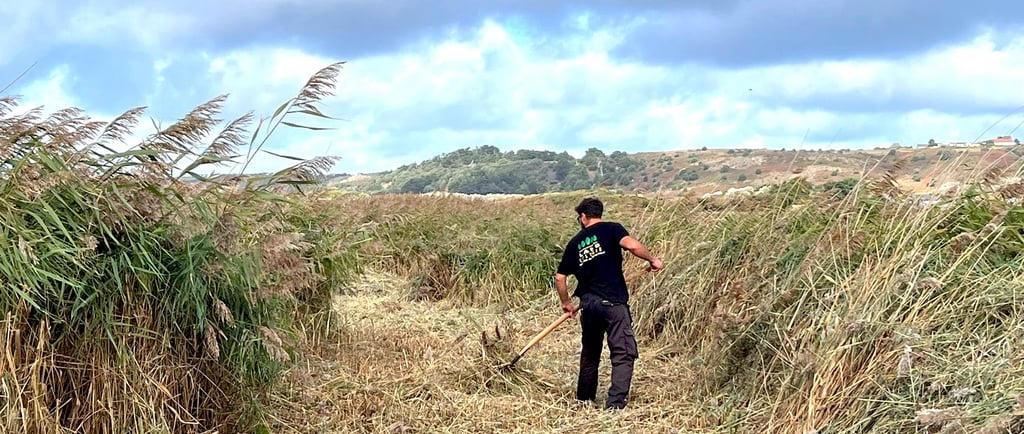
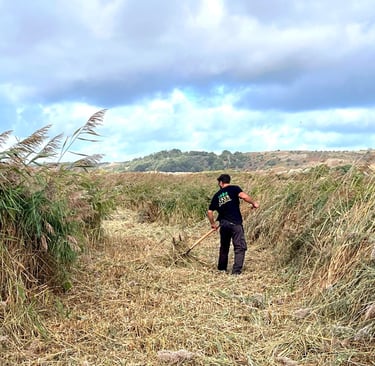
Conservation often conjures images of majestic national parks or sweeping protected areas. But in the smaller, densely populated landscape of the Channel Islands, conservation is a daily, dedicated battle fought at the grassroots level. It is not enough to simply leave nature alone; to protect our native species and the unique character of our island, we must actively defend them from the silent, rapidly moving threat of invasive species.
The Invisible Threat to Island Health
Invasive plant species pose one of the most significant and insidious risks to the ecological balance of Jersey’s woodlands, farmlands, and wetlands. Because island ecosystems are inherently more vulnerable due to their isolation and smaller size, the damage caused by fast-growing invaders is amplified.
Common offenders like Himalayan Balsam and Japanese Knotweed are not benign weeds; they are ecological bulldozers. They outcompete native plant life by monopolising light, water, and nutrients, rapidly forming monocultures where diverse ecosystems once thrived. This reduction in biodiversity has a devastating ripple effect:
Habitat Loss: Native insects, which are often specialists feeding only on native plants, lose their food source. This impacts local bird populations and mammals higher up the food chain.
Erosion Risk: The root systems of invasive can be shallow and less effective at stabilising soil compared to deep-rooted native grasses and trees. When the invasive die back in winter, they leave bare soil vulnerable to heavy rainfall and erosion, particularly along riverbanks and coastlines.
Choking Waterways: Species like Giant Hogweed can physically choke streams and wetlands, reducing water flow and oxygen levels vital for aquatic life.
For an environment as precious as Jersey's, the work undertaken by Land Culture is a continuous defence against this ecological catastrophe.
The Four-Step Framework for Restorative Practices
Land Culture’s approach to Conservation is rooted in restorative practices. We recognise that a truly healthy ecosystem is a resilient one that can sustain itself over the long term. Our comprehensive management process involves four critical, strategic steps:
Identification and Mapping (The Baseline): We start with precision. Accurately surveying, identifying, and mapping the extent and density of invasive plant populations is crucial. This establishes a baseline and allows us to prioritise treatment areas based on risk and ecological value. For instance, protecting a unique marshland might take precedence over a roadside verge. 🗺
Strategic Control (Targeted Intervention): We employ the most appropriate, localised, and low-impact methods to manage and reduce the spread of invasive. This often involves physical removal (like hand-pulling or digging), targeted cutting to deplete root energy, or, when necessary, minimal and localised application of appropriate herbicides strictly according to environmental regulations. The goal is always to control the invader without harming the surrounding native environment. 🖲
Ecological Restoration (Nurturing Native Life): Once the invasive threat is managed, the key work of restoration begins. This involves reintroducing and nurturing native plant life relevant to the specific habitat type—whether it’s woodland trees, coastal grasses, or wetland flora. We use locally sourced or grown materials to ensure genetic suitability, thus guaranteeing the long-term viability of the restored habitat. 🐝
Long-Term Monitoring and Management (Sustaining the Gain): Conservation is never a one-off task. We implement ongoing management plans to monitor treated areas and prevent re-infestation. This adaptive management cycle ensures that our dedicated efforts lead to a lasting ecological balance and that the land can sustain itself against future threats. 🤲🏼
Biodiversity: The Key to Island Resilience
The work undertaken in specific island areas—like the dedicated bracken management required in coastal zones like Plemont Bay, or delicate woodland restoration in inland valleys—is the foundation of our environmental commitment.
By restoring native biodiversity, we are strengthening the island's overall ecological resilience. Diverse ecosystems are inherently better equipped to handle shocks—whether from disease, pests, or climate change—because they have a wider variety of genes and functional niches. Protecting this natural machinery ensures that the soil, water, and unique plant diversity of Jersey remain clean, safe, and healthy.
This active conservation is not just about preserving what is beautiful—it’s about ensuring the continuity and functional health of our island’s natural resources. It is about moving from passive hope to active defence, creating a robust ecological legacy that can truly be sustained by future generations.
Our goal, since the very first step, has been to ignite awareness: the importance of truly knowing your own land by walking its paths. Each step is a lesson; each mile, a discovery. Let's start the journey together. 👣
Sustaining our environment
Follow Land Culture and find more about our environmental work.
Contact Us
Receive our Newsletter
© 2024 Copyright Land Culture. All rights reserved
Powered by @CREADORA


Phone & WhatsApp